Roseville, CA · Garage Door Service
Garage Door Roller Replacement for Roseville Homes
Worn rollers on Roseville's 1960s-2000s housing stock grind, stick, and jump track in the heat. Here's what drives the wear and what a roller job actually involves.
- Repairs & new doors
- Springs & openers
- Serving 6 nearby communities
What You Pay
We don't post a flat number here because roller jobs vary by what's actually worn. A straight roller swap on one section is a different job than replacing a full set of ten plus hinges, and nylon rollers cost more than steel but run quieter and need less grease over time. What we can tell you: the roller itself is usually the smaller line item. The bigger cost driver is whether the track has worn out alongside the rollers, which happens a lot on doors from the 1962-2007 build wave that makes up most of this area's housing stock. If your rollers are shot but the track is straight, it's a short job. If the track is bent or grooved from years of a bad roller grinding against it, that's a separate repair we'll walk you through before we touch anything.
One honest limitation: we don't stock every roller size and bearing type on the truck for every door brand built in this era. If your opener or track hardware is an older or less common spec, there can be a short order wait on the exact part, and we'll tell you that up front instead of guessing.
Why This Fails Locally
Most of the houses we work on in this service area were built between 1962 and 2007, with the bulk of that stock dating to the 1980s and 90s across the 28 named neighborhoods we cover. That means a lot of original steel rollers running on steel or galvanized track that's now 25 to 50 years old, lubricated however the last owner remembered to do it, which is often not at all.
The other half of the problem is heat. This area sits in a severe heat climate band, and garages here routinely run far hotter than the outside air, especially attached garages with a door facing west or south. Heat dries out roller grease faster than people expect, hardens stem bearings, and makes steel rollers expand slightly inside the track, which shows up as drag and noise months before anything actually breaks. Nylon rollers handle that heat cycle better than steel, which is part of why we see more owners switching when they replace.
Put those two things together, older steel track-and-roller combinations paired with sustained garage heat, and you get the exact failure pattern that brings people to a roller search instead of a full opener or spring call: a door that still lifts fine but sounds rough and hesitates doing it.
How It Shows Up
The door grinds or squeals on the way up or down, usually louder near the top or bottom of the track where the curve puts more side load on the roller. Some owners notice the door hesitating or jerking at one spot every single cycle, which usually means one specific roller has flat-spotted or a bearing has seized inside its stem.
On older steel rollers you'll sometimes see rust streaks on the track itself, or small metal shavings on the garage floor directly under the track, which is the roller wearing against metal instead of rolling smoothly. If the door has started walking slightly off-track, catching, or needing a shove partway through its travel, that's often a roller that's worn down enough that it's no longer riding the track correctly, not a spring or opener problem.
With 92,784 owner-occupied houses across this service area, we see this across every era of door and every neighborhood, but it concentrates hardest in homes still running their original rollers from construction. If the noise has been building gradually over a year or two rather than appearing suddenly, that's roller wear, not a sudden spring failure.
How Long It Takes
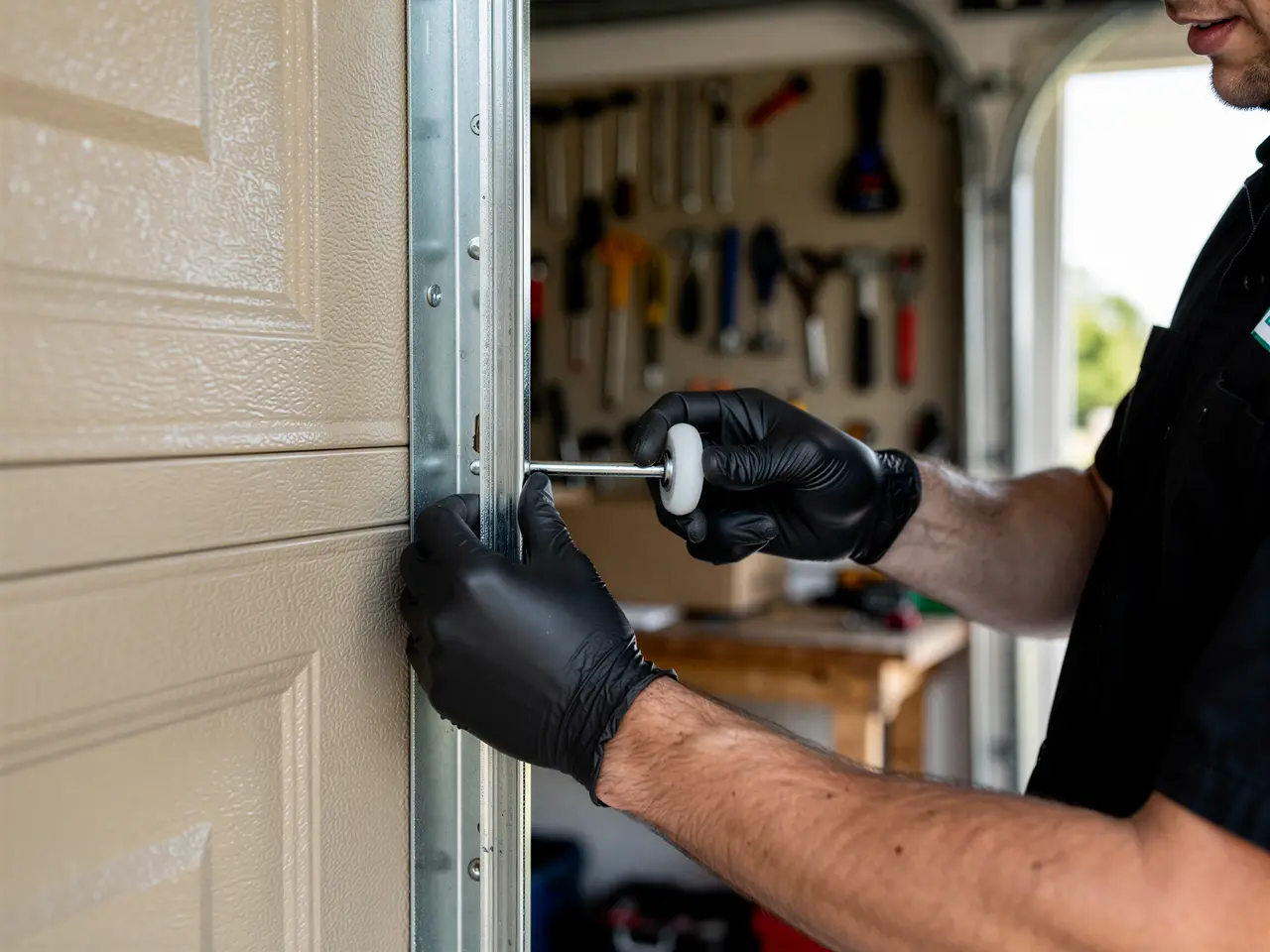
A standard roller replacement, swapping a full set on one door, is a same-visit job once we're on site and have the right rollers on the truck. If the track needs straightening or replacing because of roller damage, that adds time but it's still typically finished in one appointment. The variable isn't the labor, it's parts: if your door uses an uncommon roller stem size or an older bearing type that isn't a stock item, that can mean a short wait for the part to come in before we can finish the job. We'll know that at the first look, not after we've started.
Frequently asked questions
How do I know if it's the rollers and not the opener?
If the door grinds, squeals, or hesitates at the same spot every cycle but the opener itself runs smoothly and the door still fully opens and closes, that points to the rollers or track rather than the opener motor. A seized or flat-spotted roller creates drag that the opener has to fight through, which can sound like an opener problem even when it isn't.
Why do my rollers wear out faster here than they seem to elsewhere?
Garages in this area run hot for a sustained stretch of the year, and heat dries out roller grease and hardens bearings faster than in milder climates. Combined with a lot of local housing dating from the 1962-2007 era still running original steel rollers, that heat cycling accelerates wear in exactly the hardware most of these doors already have.
Should I replace all the rollers or just the noisy one?
If one roller has failed and the rest are the same age, we'll usually recommend replacing the full set, since they've seen the same years of heat and wear even if only one has failed first. Replacing just one often means another fails within months and you're paying for a second visit.
Related services
By Neighborhood
Roller Replacement across the Roseville area
We also handle roller replacement in these Roseville-area suburbs.
Book garage door service in Roseville
Call now or request a quote - tell us what the door is doing and where you are.