Roseville, CA · Garage Door Service
Roller Replacement for Carmichael's 1970s Garage Doors
Carmichael's houses date mostly to 1973, a decade ahead of the rest of our territory - which means steel rollers on worn track, not the nylon failures we see on newer stock. We travel from Roseville to fix it.
- Repairs & new doors
- Springs & openers
- Serving 6 nearby communities
How Long It Takes
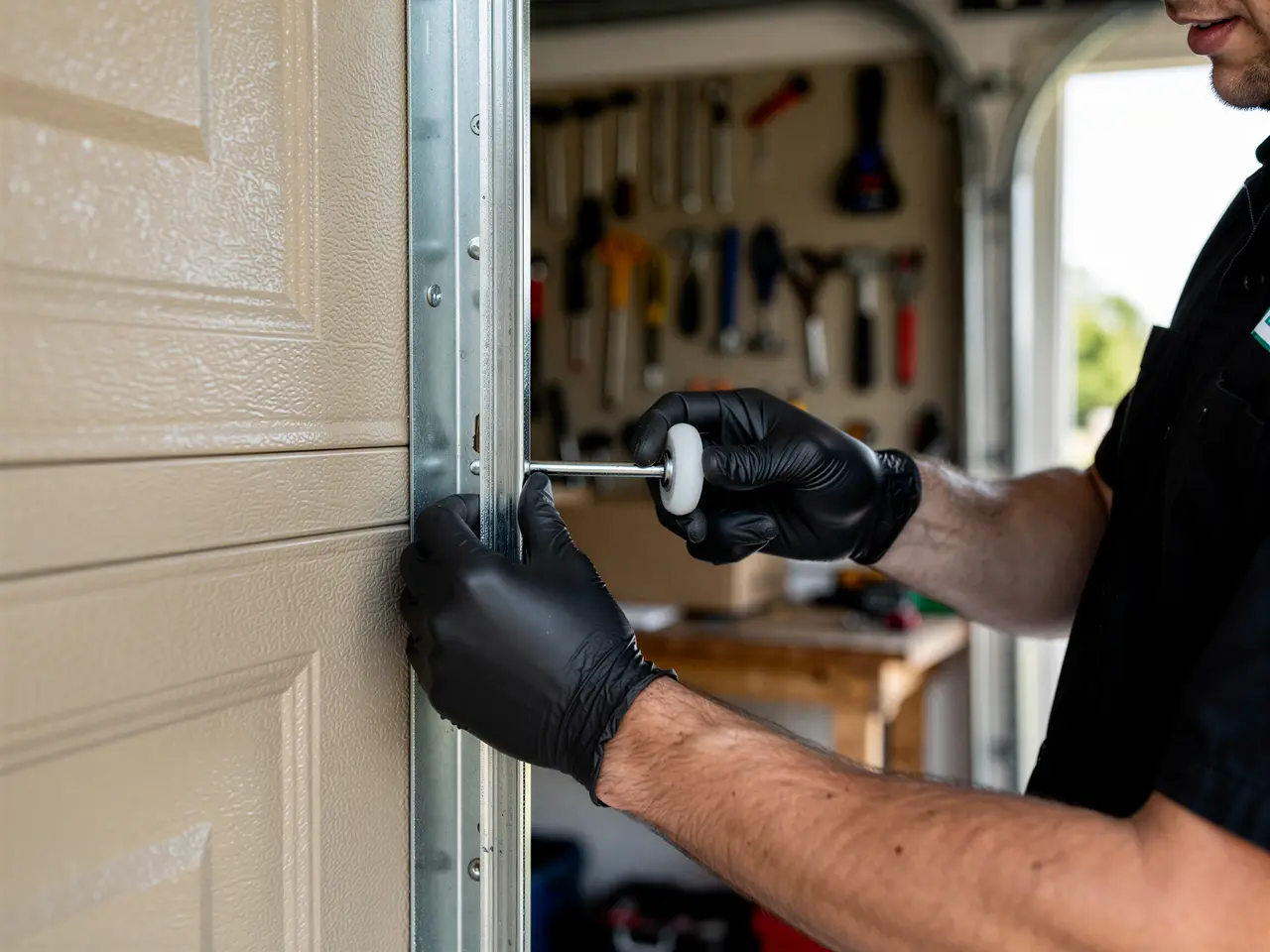
A straight roller swap on a door from this era doesn't take long once we're on site - the work itself is an hour, sometimes less if the track hasn't bent. What takes longer here is diagnosis. Houses in Carmichael went up mostly around 1973, a full decade before the median build year across the rest of our service area, and that decade matters. Doors from this period often still run on the original galvanized track with steel rollers, not the nylon rollers that became standard later. Steel rollers wear the track itself, not just the roller - so half our visits start with us checking whether the track needs straightening or replacing alongside the rollers. If it's just rollers, we're done in under an hour. If the track has egg-shaped grooves worn into it from forty-plus years of steel on steel, the job runs longer, and we'll tell you that before we start, not after.
Getting It Booked In
We run out of Roseville, about ten miles from Carmichael, so when you call we're scheduling a drive, not a walk-in. That's not a complaint - it's just the honest shape of the job. Tell us the door's noise (grinding, popping, a hard catch at one spot in the travel) and roughly how old the house is, and we'll usually know before we arrive whether we're bringing steel rollers, nylon rollers, or both, plus spare track sections. Carmichael's housing stock being older on average than much of the rest of our coverage area means we stock more steel-roller hardware for these calls than we used to. We'll give you a window, not a guess dressed up as a time - and if the job turns out bigger once we're under the door (a bent track, a dead end bearing plate), we call it out and quote it before touching anything further.
How It Shows Up
The complaint we hear most from Carmichael callers is a loud, rhythmic grinding on the way up or down - not a single bang, but a repeating scrape that gets worse near the top of the travel. That's steel rollers riding a track that's lost its smooth inner edge after decades of use. Some owners also notice the door catching or jumping slightly at the same spot every cycle, which usually means one roller has worn down enough that it's no longer riding true in the groove. On newer doors elsewhere we'd expect nylon rollers to just go quiet and sticky before failing outright. On a 1973-era door, you get noise first, binding second, and then one day the door doesn't want to move at all because a roller's finally seized or snapped off its stem.
Parts We Carry
We carry both steel and nylon roller sets on the truck, along with the stems and bearings that go with each, because Carmichael's older housing stock means we can't assume one type covers the call. Steel rollers are louder but tougher against the kind of heat cycling this area sees - summers here run hot enough that lubricant on any roller type dries out faster than it would in a milder climate, which is part of why the grinding shows up as often as it does. Nylon rollers run quieter and we'll usually recommend them as a replacement even on an older steel-roller door, unless the track itself is too worn to take the switch cleanly. One limit worth saying plainly: if the track is bent badly enough, new rollers alone won't fix the noise or the binding. We'll say so rather than sell you rollers that won't solve the actual problem.
What Can Go Wrong
On a door this age, the roller stem can snap off flush with the bracket when it finally gives, which sometimes takes a chunk of the bottom bracket with it - that turns a roller job into a bracket repair mid-visit. Severe summer heat in this area also means grease and lubricant on older steel rollers breaks down faster than the maintenance schedule most homeowners are working from, so a roller that looked fine six months ago can be metal-on-metal today. The other thing that goes wrong is scope creep: we pull one bad roller and find the track worn uneven on both sides, which means the fix isn't four rollers, it's four rollers and two track sections. We won't guess at that over the phone - we tell you what we see once the door's open.
Why This Fails Locally
This isn't a generic roller problem - it's a 1973 problem. Doors built around then came standard with steel rollers on track designed for that hardware, and nobody's updated most of those tracks since. Across the wider territory we cover, median build year runs closer to 1981, and a lot of that newer stock already shipped with nylon rollers from the factory, which fail differently and later. Carmichael's median household income, at $84,376, runs below the $95,592 median across the rest of our territory, and we mention that only because it shapes a real decision owners here face more often than elsewhere: replace just the rollers and track section now, or let a bigger repair wait. We don't push a full door replacement when a track-and-roller repair will carry the door another decade - that call depends on the door in front of us, not a sales script.
Frequently asked questions
Why does my garage door grind loudly but still open fine?
On a door built around 1973, that grinding is almost always steel rollers riding a track whose inner groove has worn uneven after decades of use. The door still moves because the rollers haven't seized yet - but the noise means the track surface is degrading, and it usually gets worse, not better, until the rollers and sometimes a section of track get replaced.
Do you carry roller parts for older Carmichael doors on the truck?
Yes. We stock both steel and nylon roller sets, stems, and bearings, because a lot of Carmichael's housing stock dates to the early 1970s and still runs original steel-roller hardware that newer-build areas don't need as often. We'll ask the door's rough age when you call so we bring the right parts the first trip.
Can you just swap my steel rollers for nylon ones?
Usually, yes, and we'll often recommend it since nylon runs quieter and handles heat cycling a bit better. The limit is the track - if it's worn or bent badly from years of steel-on-steel contact, new rollers alone won't fix the binding or noise, and we'll tell you that before selling you a roller-only fix.
How far out is Carmichael from your shop?
About ten miles from Roseville, where we're based. We don't keep a branch or depot in Carmichael - every call is a drive out, so we schedule a window rather than promising an on-demand response time.
More garage door services in Carmichael
Book garage door service in Roseville
Call now or request a quote - tell us what the door is doing and where you are.