Roseville, CA · Garage Door Service
What That Garage Door Sound Is Actually Telling You
A grinding, popping, or squealing garage door in Roseville usually points to hardware from the 1962-2007 building boom working against decades of hot summers. Here's what the sounds mean.
- Repairs & new doors
- Springs & openers
- Serving 6 nearby communities
Checking It Yourself
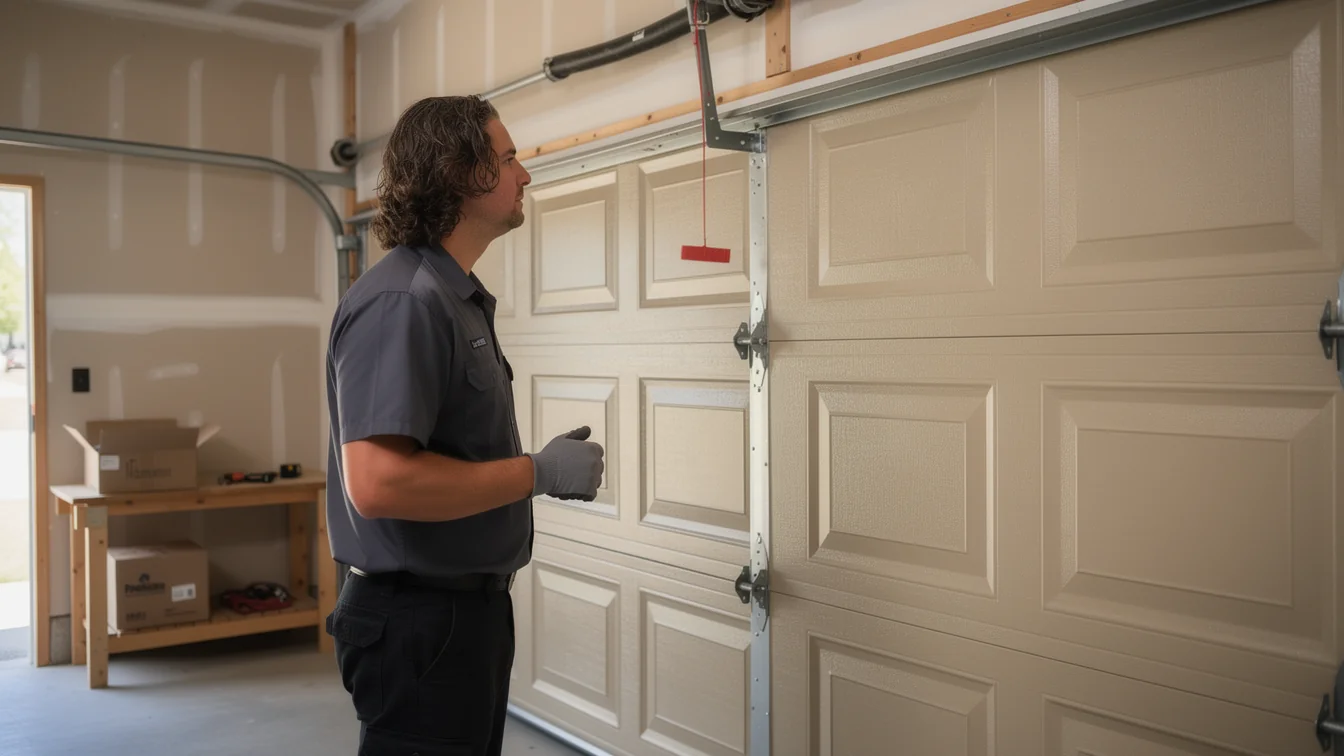
Start by watching the door move, not just listening to it. Open and close it once with the lights on and your phone recording slow-motion video if you can. A rhythmic thump every few feet usually means a flat spot on a roller, not a spring problem. A single loud bang followed by the door refusing to open is almost always a broken torsion spring, and that one you leave alone. Check the tracks for visible gaps or bends, and run a hand (door unplugged from the opener first) along the horizontal track to feel for looseness in the mounting brackets. On houses built during Roseville's main growth years, 1962 through 2007 with the typical home dating to around 1981, a lot of that hardware is original or close to it, so brackets that have shifted a quarter inch over forty summers aren't unusual. Listen for where the noise happens in the cycle: right at opening is often the opener itself, mid-travel is track or rollers, right at the top is usually the spring or the cable drum. Note it down. That detail is the difference between a tech diagnosing the job over the phone and one guessing on site.
What Is Going On
Most of what people call "garage door noise" falls into four buckets: metal rollers in a worn track (a rolling, grating sound), a dry hinge or worn bearing plate (a sharp squeal on each pivot), loose hardware vibrating against the door panel (a rattle that changes with wind or truck traffic outside), or a spring and drum system losing tension (a deep creak near the top of the cycle, sometimes with visible sag on one side). In the 1980s-90s stock that makes up most of Roseville's housing, steel rollers without nylon sleeves are common, and those wear into an oval shape that thumps instead of rolls. Opener chains that have never been lubricated will also develop a steady clack that gets worse, not better, over time. None of these sounds mean the same thing twice across different doors, which is exactly why guessing from a one-line description over the phone is a bad habit. A door that whines right when the opener motor kicks in is telling you something different from one that groans only when it's fully open and under spring tension. Match the sound to the moment in the cycle before you decide what's wrong.
When It Stops Being a DIY Job
Lubricating rollers and hinges, tightening visible bolts, and clearing track debris are reasonable for an owner to handle. Torsion springs are not. They hold enough stored tension to cause a serious injury if the winding cone slips, and that's true whether the door is five years old or thirty-five. If the noise comes with the door sagging unevenly, a cable that's frayed or off the drum, or a track that's visibly pulled away from the frame, stop operating the door and call someone. We'll say plainly that we don't recommend owners attempt spring adjustment or cable replacement themselves, full stop, regardless of how straightforward a video makes it look. One honest limitation: if a part has been discontinued by the original manufacturer, which happens on doors from the earlier end of Roseville's 1962-2007 build range, we may need to source a compatible replacement rather than an exact match, and that can add a day or two to the job. We'll tell you up front if that's the case rather than quote a timeline we can't hit.
What Local Conditions Do
Roseville sits in a climate band classed as severe heat, and that matters for noise in a specific way: steel expands and contracts across the kind of summer-to-winter swing this area sees, and hardware that was torqued down tight in cooler weather can work loose by August. Nylon rollers and plastic idler bearings, both common upgrades on older Roseville doors, soften slightly in sustained heat, which changes how they sit in the track and can introduce a new rattle that wasn't there in spring. Garages that sit unshaded through the afternoon see the inside face of the door run hotter than the outside temperature, and on doors with steel panels and foam-core insulation from the 1980s-90s era, that heat cycle loosens panel seams and screws over years, not days. None of this is a defect in any one door. It's what this climate does to hardware over a couple of decades, and it's a large part of why a door that was silent for its first ten years starts talking back in its twentieth.
Frequently asked questions
My garage door squeals only when it's hot outside. Is that normal?
It's common here. Severe summer heat softens plastic rollers and bearing plates slightly and changes how tightly metal parts fit together, so a door that's silent in winter can develop a squeal by midsummer. Lubricating the hinges and roller stems usually quiets it. If it doesn't, the roller itself may be worn and due for replacement.
Is a loud bang always a broken spring?
Usually, yes, especially on older torsion setups common in Roseville's 1980s-era housing stock. A single sharp bang followed by the door feeling heavy or refusing to open points to a snapped spring. Don't try to operate the door further. Springs under tension are not a safe DIY repair.
Why does my door rattle more than it used to, even though nothing broke?
Years of heat cycling loosen screws, brackets, and panel seams gradually rather than all at once. A door built during Roseville's main growth period can develop new rattles a decade or two in simply from thermal expansion and contraction, not from any single failure.
Related garage door services in Roseville
More garage door guides
Book garage door service in Roseville
Call now or request a quote - tell us what the door is doing and where you are.