Roseville, CA · Garage Door Service
Is Your Old Garage Door Worth Fixing, or Done
Roseville homes built between 1962 and 2007 carry original hardware that heat stress wears out fast. Here's how to check your door before you call anyone.
- Repairs & new doors
- Springs & openers
- Serving 6 nearby communities
Checking It Yourself
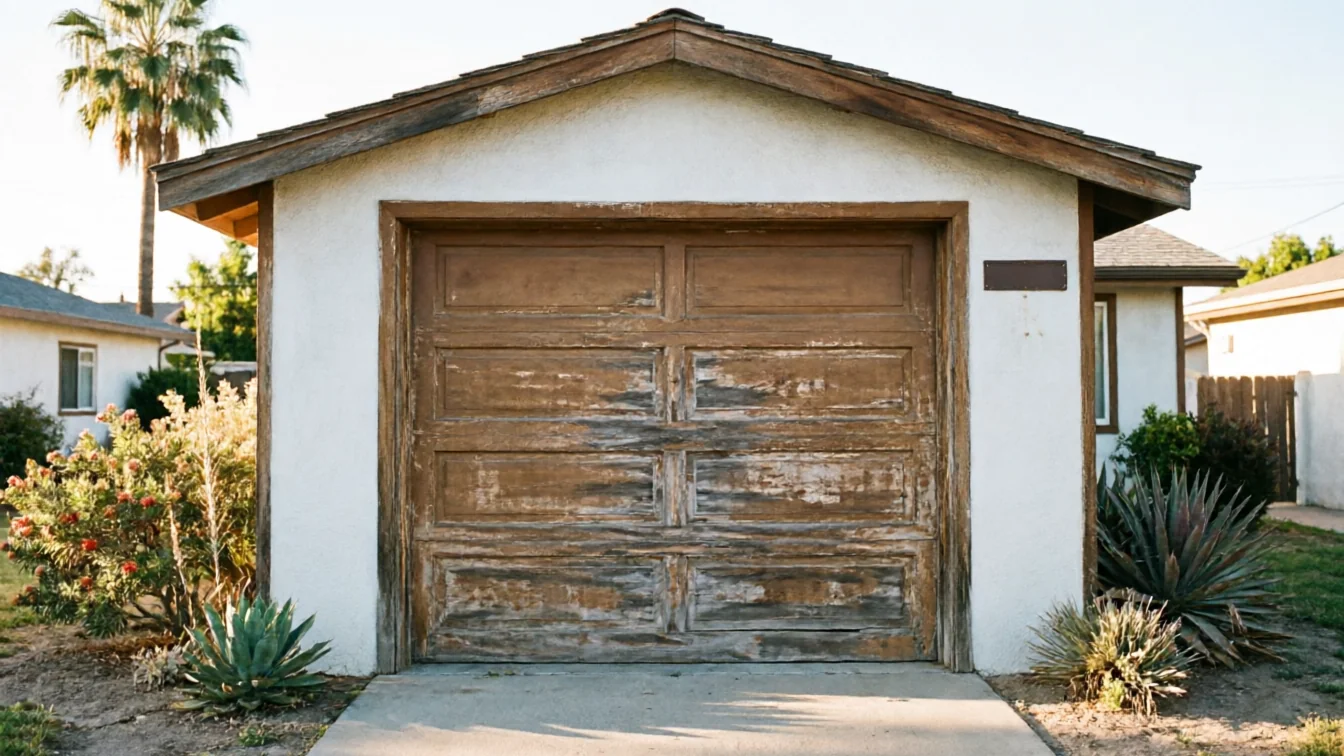
Most of Roseville's housing went up between 1962 and 2007, with the median build year sitting around 1981, so there's a good chance your door and opener are original or close to it. Start by pulling the manual release and lifting the door by hand, slowly, about halfway. If it stays put on its own, the springs are still doing their job. If it drops or wants to slam down, the spring has lost tension and that's not a DIY fix.
Next, look at the torsion spring itself if you can see it above the door - a gap in the coil means it's broken, full stop. Check the rollers for flat spots or cracking, and run a hand along the track for rust or pitting. Doors from the 1980s and 90s, which make up most of the stock across this area, often still run galvanized rollers and single-layer steel panels that haven't aged well after three or four decades of Central Valley summers. Listen for grinding on the way up - that's usually bearings, not the opener motor.
If the door moves smoothly, lifts evenly, and the opener reverses when it hits something, you're probably fine for now. None of this requires tools beyond a flashlight and a ladder.
What Is Going On
Heat is the thing doing the damage here, and it's a severe band in this part of the valley. Repeated summer heat cycles dry out the lubricant in bearings and hinges faster than a cooler climate would, and they make steel panels expand and contract enough to loosen screws and warp thin-gauge sections over the years. On a door built in the 1980s or 90s - which describes a large share of homes in this area - that cumulative stress adds up differently than it would on a door installed in the last decade with better-sealed bearings and heavier-gauge steel.
Nylon rollers degrade under heat too, going brittle and cracking at the stem, which is a common failure point on original hardware from that era. Opener circuit boards from the same period also run hotter in a garage that bakes all afternoon, and capacitors on older boards fail at a higher rate than the sealed units sold now. None of this means every old door is a lost cause - a lot of 80s and 90s doors are still structurally sound steel, just running tired springs and dried-out rollers. The panel itself usually outlasts the moving parts.
When It Stops Being a DIY Job
A broken torsion spring is never a DIY repair - the spring is under enough tension to cause real injury, and that's true whether the door is five years old or forty. If the cable has jumped the drum, or you see frayed strands, stop touching it and call. Bent track, a door that's come off its rollers, or an opener that runs but won't engage the chain are also past the point where a homeowner with a ladder should keep going.
Here's the honest limit on our end too: if your opener or spring system is old enough that parts are no longer made for it, we're not going to pretend we can source an exact match. On houses from the 1962-2007 range, that comes up more than people expect, and sometimes the right call is a new opener and hardware rather than hunting for a discontinued part. We'll tell you which situation you're in before we start work, not after.
What Local Conditions Do
We work this side of the Sacramento area, out to places like Antelope, Foothill Farms, Granite Bay, Fair Oaks, Carmichael, and Gold River, along with the closer-in areas like Diamond Oaks and Blue Oaks. Across the broader service area there are roughly 92,784 owner-occupied houses out of about 219,697 households total, and a lot of them share the same build era and the same heat exposure, which is why we see the same handful of failures over and over: brittle rollers, dried bearings, and springs that gave out a few years sooner than the manufacturer's rating would suggest.
That heat load is the single biggest factor in whether an older door is worth repairing. A sound steel panel with a tired spring is an easy fix. A door where the opener board has already cooked once and the rollers are cracked across the board is a different conversation - at that point, replacing the moving parts as a set usually costs less over time than repairing them one failure at a time.
Frequently asked questions
My garage door is from the 1980s - is it too old to fix?
Not necessarily. A lot of 1980s and 90s steel panels in this area are still structurally sound; it's usually the springs, rollers, and opener electronics that have worn out from repeated summer heat cycles, not the door itself. We check the panel and track before recommending replacement.
Why do garage door parts fail faster here than other places?
This area sits in a severe heat band, and repeated hot cycles dry out bearing grease and roller stems faster than a milder climate would. On original hardware from houses built in the 1962-2007 range, that shows up as brittle nylon rollers and springs that lose tension earlier than their rated cycle count.
Can I replace a broken torsion spring myself?
No. A torsion spring holds enough stored tension to cause serious injury if it releases wrong, regardless of the door's age or size. This is one repair where we'd rather you call than try it, even if every other part of the job looks straightforward.
What if my opener parts are discontinued?
It happens more often with openers and hardware from the 1960s through the 1990s. When we can't source an exact match, we'll say so upfront and walk you through whether a new opener makes more sense than continuing to chase parts for the old one.
Related garage door services in Roseville
More garage door guides
Book garage door service in Roseville
Call now or request a quote - tell us what the door is doing and where you are.