
Roseville, CA · Garage Door Service
Why Your Garage Door Keeps Jumping the Track
Roseville homes built mostly between 1962 and 2007 carry track hardware that wasn't built for this area's severe heat band. Here's what actually knocks a door off track.
- Repairs & new doors
- Springs & openers
- Serving 6 nearby communities
Checking It Yourself
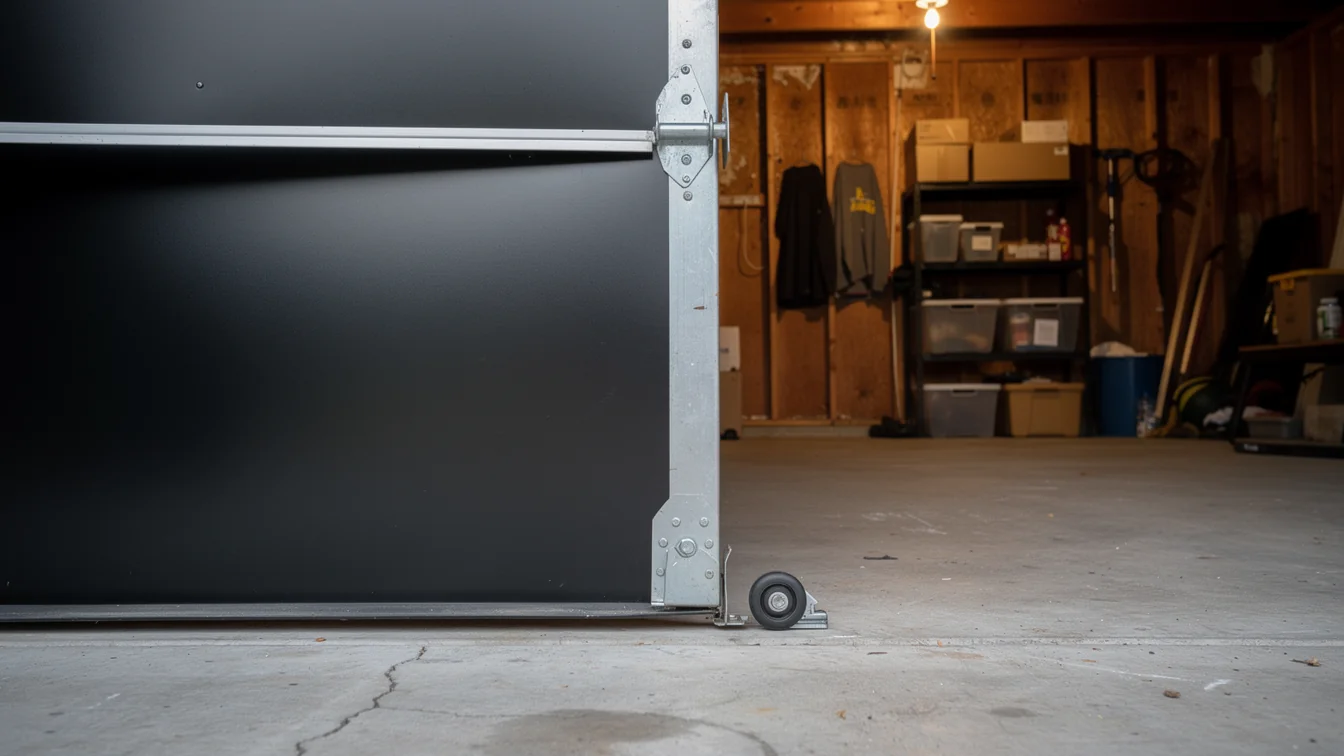
Before you call anyone, open the door halfway and look at the vertical track on both sides. Run your hand along the rail - not the rollers, the rail itself - and feel for a bow or a flare where the metal has pulled away from the wall. If the door built in this area is original to a house from the 1962-2007 run that makes up most of the stock here, you're probably looking at a track rail that was never heavy-gauge to begin with.
Check the brackets where the track bolts to the jamb. On houses with the median build year of 1981, those brackets are usually steel strap mounted with two or three lag screws into the framing, and after enough summers of heat expansion those screws back out a turn at a time. A quarter inch of play at the bottom bracket shows up as a half inch of wobble at the top rail.
Last thing: roll the door down slow and watch the bottom roller as it crosses the curved section into the horizontal track. If it hesitates or clunks before it rolls through, the curve has opened up slightly - common on doors that have cycled through a lot of hot afternoons without anyone touching the hardware.
What Is Going On
A door doesn't jump the track from one bad day. It walks off slowly, one misaligned bracket or one bent section at a time, and in this service area the main driver is heat working on hardware that's been in place since the 80s or 90s stock most neighborhoods still run.
Steel track expands in the heat and contracts overnight, and a severe heat climate means that cycle repeats hard and often across a summer. Each cycle loosens a lag screw another sixteenth of a turn. Multiply that by a few hundred cycles over the life of a door built in the 1962-2007 window and you get a bracket that's no longer square to the jamb - which pulls the rail a fraction out of plumb, which makes the rollers ride the edge of the track instead of the center.
Once a roller is riding the edge, it takes less and less force to pop it out entirely. A slammed door, a gust through an open window, even a stiff spring pulling unevenly - any of those can be the final push on a track that heat already weakened. The track isn't failing because it's old in some abstract sense. It's failing because it's been expanding and contracting in this specific climate for longer than it was built to.
When It Stops Being a DIY Job
Tightening a loose bracket or two is fair game if you can reach it safely and the door isn't under spring tension while you work. Past that, be honest about where the line is.
If the track is bent - not just loose, but visibly curved - don't try to bend it back. A track that's been bowed by years of heat cycling is brittle in ways that aren't obvious, and forcing it straight can crack the rail right where you're gripping it. That's a replacement section, not a repair.
If the door came off the track while it was moving, leave it where it sits. A door hanging half off a horizontal rail is still under spring tension, and that tension doesn't care whether a person is in the way. This is the one place we'll say plainly: this isn't a job to push through alone once the door has actually left the rail, regardless of how simple the fix looks from the garage floor.
And if you're on a house from the earlier end of the 1962-2007 range, the track hardware may not match anything sold today. Sourcing an exact-width replacement rail for some of that older stock can take longer than a same-week fix, which is worth knowing before you commit to a timeline.
What Local Conditions Do
The heat band this area sits in doesn't just warm up the garage - it puts real cyclical stress on anything bolted to a wall that faces afternoon sun, and track hardware takes that stress for the life of the door. That's true whether the house is near Antelope or out toward Foothill Farms or Orangevale; the 28 named areas this company covers run on largely the same 1980s-90s hardware era, so the failure pattern repeats house to house rather than being a one-off.
Garages that face west or south get it worst, since that's the wall catching the longest heat exposure each day. If your track runs along a west-facing interior wall, expect the lag screws and brackets to loosen faster than a north-facing identical setup a few doors down.
There's no fix that stops the heat cycling - that's the climate, not a flaw in the house. What actually works is catching the loose brackets before they let the rail drift out of plumb, which is a five-minute check twice a year rather than a repair after the door's already jumped the rail.
Frequently asked questions
Why does my garage door only go off track in summer?
Heat is the trigger. Steel track expands during the day and contracts at night, and in this area's severe heat band that cycle repeats hard across a summer. Each cycle loosens brackets a little more, so a rail that was fine in spring can have enough play by August to let a roller ride off the edge.
Can I just bend the track back myself?
Not if it's visibly bowed. Track that's been bent by repeated heat expansion is brittle at the bend point, and forcing it straight often cracks the rail instead of fixing it. A bowed section usually needs replacing, not reshaping.
My house was built in the 80s - does that matter?
Yes. Most houses in this area went up between 1962 and 2007, with the median build year around 1981, and that era's track hardware tends to be lighter gauge than what's sold now. It's not broken, but it loosens and warps under heat cycling faster than heavier modern rail.
Is this a problem across the whole area or just certain neighborhoods?
It's widespread. From Antelope and Foothill Farms out to places like Orangevale and Fair Oaks, most of the housing stock shares the same 1980s-90s build era and the same heat exposure, so the same bracket-and-rail wear pattern shows up house after house, not just in one pocket.
Related garage door services in Roseville
More garage door guides
Book garage door service in Roseville
Call now or request a quote - tell us what the door is doing and where you are.