Roseville, CA · Garage Door Service
What Roseville's Heat and Housing Age Mean for Your Garage Door Spring
Roseville homes built 1962-2007 face extreme summer heat that stresses garage door springs and openers. Know what to check yourself and when to call a pro.
- Repairs & new doors
- Springs & openers
- Serving 6 nearby communities
Checking It Yourself
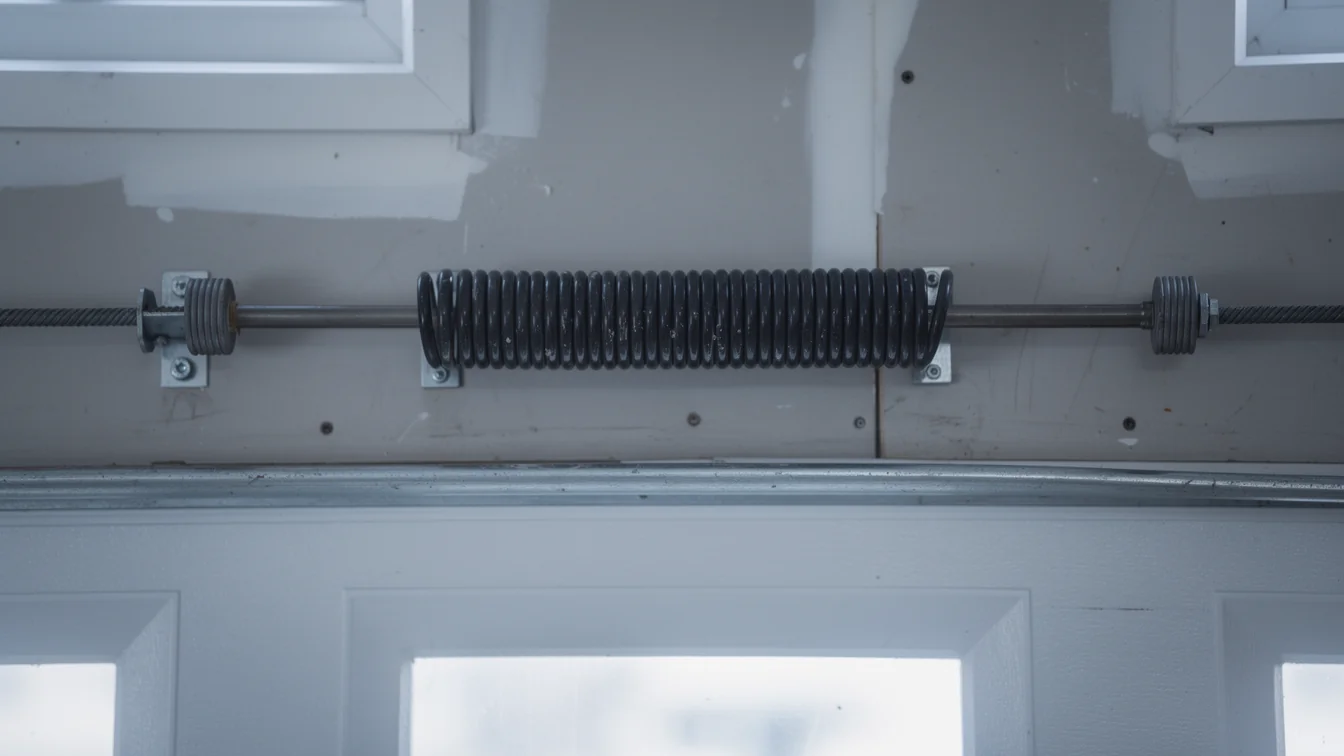
Start with the torsion spring above the door - the coiled bar that does the actual lifting. Look for a visible gap in the coil, that's a break, and you'll usually hear it too, a loud bang from the garage. If the spring looks whole, disconnect the opener (pull the red release cord) and lift the door by hand halfway. A door in good balance stays put. One that slams down or shoots up means the spring has lost tension, which happens gradually before it happens all at once. Check the cables on either side of the bottom bracket for fraying strands - thin wire cable under full door weight is not something to test further by hand. Run your hand along the track for dents or gaps where rollers have jumped out. In a lot of Roseville houses, especially ones that haven't had the opener or hardware touched since they were built between 1962 and 2007, this is still the original spring. If you don't know how old it is, that's useful information on its own.
What Is Going On
Roseville sits in a climate band the federal data marks as severe heat, and heat is harder on a torsion spring than most owners expect. The spring is wound steel under constant tension, and repeated heat cycling - hot garage during the day, cooling at night - dries out the factory lubricant faster than it would in a mild climate. Dry coils rub against each other on every open and close, and that friction wears the metal down cycle by cycle. Pair that with age: most of the housing stock here dates from the 1980s and 90s, inside a broader 1962-2007 build window, which puts a lot of original springs well past their rated life even if nobody's touched them. A spring rated for 10,000 cycles doesn't know it's rated for that - it just keeps flexing until the steel fatigues and lets go, usually without much warning. None of this is about one bad part. It's wear plus heat plus time, working on the same coil for decades.
When It Stops Being a DIY Job
A broken spring is not a repair you do yourself, full stop - the coil is storing enough force to cause real injury, and winding a replacement needs the right bars and the right cone size for your door's weight. If the door is off track, if a cable has snapped, or if the door won't stay in place when disconnected from the opener, that's a call, not a project. We'll be straight about one limit: we don't stock every spring size on the truck, and on an uncommon door width or an older low-headroom setup, getting the exact match can mean a short wait rather than a same-visit fix. If your door is just noisy - squeaking rollers, a dry hinge - that's grease and ten minutes, no call needed. The line is whether the door is still under control. Once it isn't, hands off.
What Local Conditions Do
Across this service area there are 92,784 owner-occupied houses, a good share of them built in the same 1962-2007 window with the bulk clustered in the 1980s and 90s. That means a lot of garages carry the same kind of wear at roughly the same age, and the severe summer heat here is doing the same job on all of them - drying lubricant, fatiguing coils, loosening what time and temperature loosen. We work out from Roseville to the surrounding areas, including Antelope, Foothill Farms, and out to Loomis, Orangevale, and Elverta, houses built in that same stretch of decades under the same climate. It's less about any one street and more about a pattern: older torsion hardware, a hot garage, and a spring that was never going to last forever. Knowing which bucket your door falls into is most of the troubleshooting.
Frequently asked questions
How do I know if my garage door spring is original to the house?
If the house was built in the 1980s or 90s and you've never had a spring replacement or a receipt for one, assume it's original. At that age, in a climate with this much summer heat, an untouched spring is well past the point where failure would surprise anyone.
Why does my spring seem to wear out faster here than people describe online?
A lot of online advice assumes a milder climate. Roseville sits in a severe heat band, and heat cycling dries spring lubricant and speeds up metal fatigue faster than a cooler area would. Combine that with an older house and the spring is working harder for longer.
Is it ever okay to just tighten or adjust the spring myself?
No. Adjusting spring tension means working with a bar against a coil under load, and it's the single most dangerous task on a garage door. If the door is out of balance, that's a call, not an adjustment you make yourself.
My door is noisy but still opens fine - do I need to call anyone?
Not necessarily. Noise from dry rollers or hinges is usually a lubrication issue, not a spring issue, and it's a fair DIY fix. The spring becomes urgent when the door won't hold its position or you see a gap in the coil.
Related garage door services in Roseville
More garage door guides
Book garage door service in Roseville
Call now or request a quote - tell us what the door is doing and where you are.