Roseville, CA · Garage Door Service
Garage Door Service for Orangevale's 1970s Housing Stock
Orangevale's garage doors mostly date to the mid-1970s, before photo-eye sensors were standard. We drive out from Roseville, 8 miles away, to fix what that era left behind.
- Repairs & new doors
- Springs & openers
- Serving 6 nearby communities
Why This Fails Locally
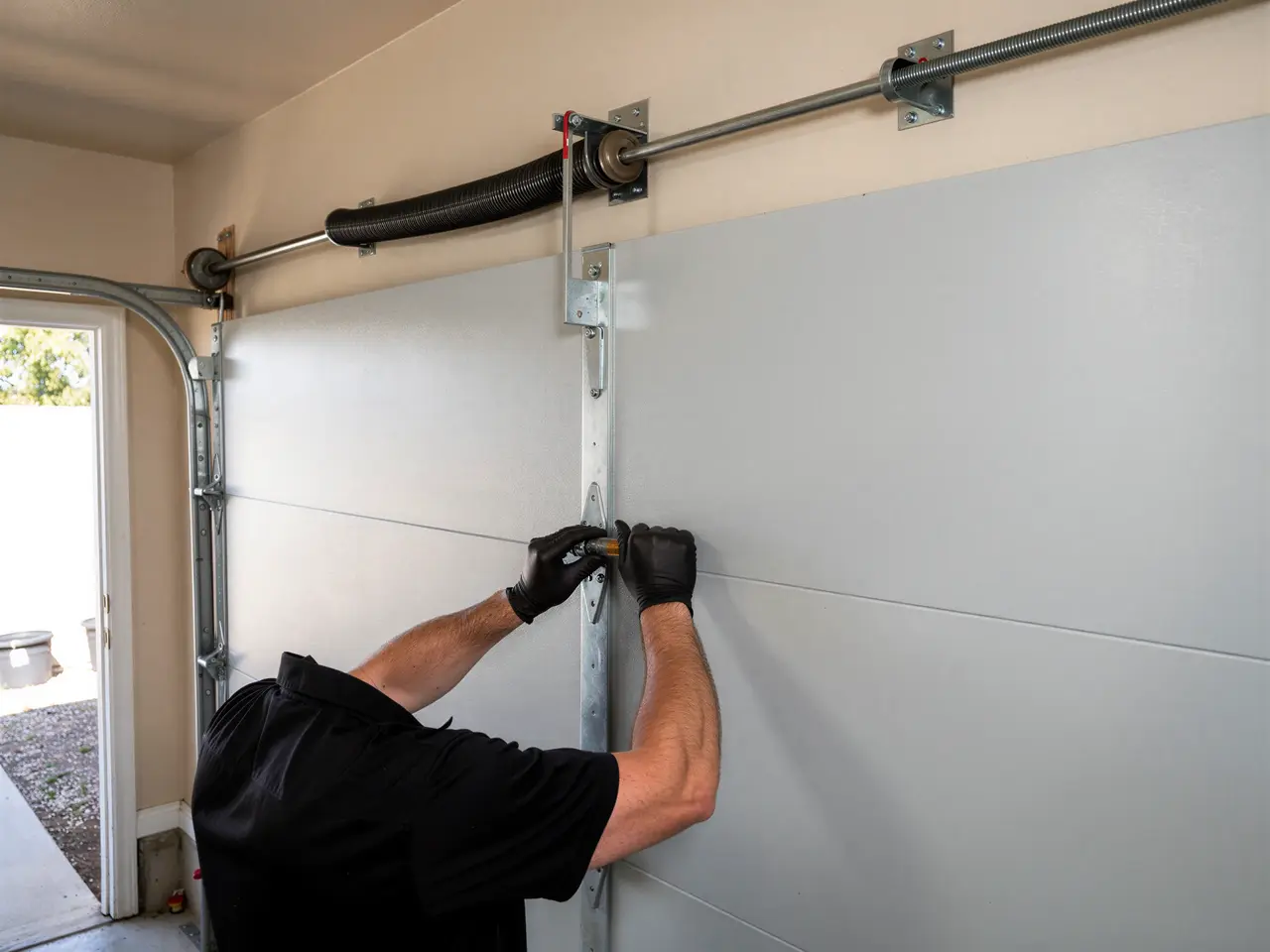
The typical house in Orangevale went up around 1976, which puts it squarely in the extension-spring era. Doors from that period were almost always hung on exposed extension springs over the horizontal track, not the torsion bar you'd see on anything built after the mid-80s. A lot of those original springs have been swapped once, maybe twice, by whoever owned the house before you - and if the work was done without a sensor retrofit, you may still have an opener that closes blind, no photo-eye, no reversal if something's in the way. That's not a hypothetical. Federal rules requiring photo-eye sensors on residential openers didn't take hold until the early 1990s, well after most of this neighborhood's garages were framed and sided. Add in the region's severe summer heat, which this service area sits squarely inside, and you get a second failure point: steel panels and nylon rollers that have spent five decades expanding and contracting in triple-digit heat cycles. The rollers go first, usually, then the cable fraying where it rides the drum. None of this is unique to one house - it's the neighborhood's hardware, built to a 1970s spec, aging the same way across roughly 13,000 households here.
How We Fix It
We come out from Roseville, about 8 miles west, so we're not guessing at what a mid-70s Orangevale garage looks like before we open the truck. Extension-spring systems need different tools and different safety handling than torsion setups - you cage a torsion spring, you don't cage an extension spring, and treating one like the other is how people get hurt. We replace the springs to match the door's actual weight, not a generic size, because a lot of these original doors have been swapped for heavier insulated replacements over the years without anyone updating the spring rate. If the opener predates the photo-eye requirement, we'll tell you straight: that's worth upgrading, not patching. We also check rollers and the drum-cable wrap specifically for heat-cycle wear, since that's the failure pattern this area's climate produces more than cold-weather regions ever see. We don't stage a crew in Orangevale - we run the job from Roseville - so the quote you get accounts for the drive, and we book around it rather than pretending we're already on the block.
What Can Go Wrong
The most common failure we see on 1970s-era Orangevale garages is a snapped extension spring that's been stretched past its rated cycles because nobody replaced it on schedule - these springs have a lifespan measured in open-close cycles, and a 48-year-old spring has usually seen more of them than it was built for. Second most common: a cable that's jumped the drum because the original pulley bracket has worked loose from decades of thermal expansion in the area's hot summers. Less common but more dangerous: an opener from before sensor requirements, still in service, with no photo-eye and a worn safety reversal mechanism. We've also seen panel delamination on original steel doors that were never insulated - not a safety issue, but it makes the garage noticeably hotter, which matters in a climate band rated for severe heat. None of these are exotic failures. They're what you'd expect from hardware this old carrying this area's heat load for this many years.
Can You Do This Yourself
Checking roller wear or listening for a grinding drum is fine to do yourself - pull the door halfway, look at the rollers, see if they're cracked or flat-spotted. Replacing an extension spring is not a DIY job, full stop. Under tension, that spring can take a finger or an eye, and the containment cable that's supposed to stop it flying loose is itself often missing on original 1970s installs. If your opener has no photo-eye sensors near the floor track, don't try to add them yourself to save a service call - wiring it wrong can disable the safety reversal entirely, which defeats the point. We'll say plainly where we draw our own line too: if a door's structural panel is cracked clean through or the track is bent beyond pulling straight, replacement beats repair, and we'll tell you that instead of billing for a patch that won't hold.
Getting It Booked In
Since we're routing out from Roseville rather than keeping a crew parked in Orangevale, the most useful thing you can tell us up front is the door's age and whether it's extension-spring or torsion - a quick look at the top of the door, springs running horizontal over the track means extension, a single spring over the header means torsion. That alone tells us which parts to load before we drive the 8 miles out. We serve the surrounding area too, and you can see the full list of towns we cover from Roseville on our service area page. For the full rundown of what we handle beyond spring and opener work, that's covered on our main Roseville service page.
Frequently asked questions
Why does my garage door still have exposed springs over the track instead of one spring above the door?
That's an extension-spring system, standard on houses built in the mid-1970s like most of Orangevale. Torsion springs, mounted as a single spring bar above the door, became the common default in later decades. Both work fine when maintained, but they fail differently and need different repair handling.
Does my opener need a safety sensor upgrade?
If your opener predates the early-1990s photo-eye requirement and hasn't been replaced since, it likely has no photo-eye sensors at the base of the track. That means the door can close on an obstruction without reversing. Given how many Orangevale garages date to the 1970s, this is worth checking rather than assuming.
How often do garage doors fail in this area's heat?
The service area sits in a climate band rated for severe heat, and that heat cycling is hard on rollers, cables, and non-insulated steel panels over decades. A door built when the house was - often the mid-1970s here - has usually seen enough heat cycles that rollers and cable wrap are due for inspection even without an obvious failure yet.
Do you have a crew based in Orangevale?
No. We run jobs out from Roseville, about 8 miles away, and quote the drive into the job rather than claiming a local branch we don't have.
More garage door services in Orangevale
Book garage door service in Roseville
Call now or request a quote - tell us what the door is doing and where you are.