Roseville, CA · Garage Door Service
Garage Door Repair for Orangevale's 1970s Housing Stock
Orangevale homes median from 1976 carry older single-car steel and wood doors. We travel 8 miles from Roseville to fix springs, openers, and tracks worn by heat.
- Repairs & new doors
- Springs & openers
- Serving 6 nearby communities
Why This Fails Locally
Orangevale's median home dates to 1976, six years earlier than the 1981 median across the wider service area. That six years matters more than it sounds. A door from the mid-70s is more often a plain steel slab or a wood panel unit on a single-car opening, hung on hardware nobody has restocked since Carter was in office. These doors run on extension springs mounted along the horizontal track far more often than the torsion setups that became standard in newer construction - and extension springs fail differently, usually snapping a cable or a pulley bracket rather than the spring itself. Add the region's severe summer heat, and the rubber and nylon parts on a door this old have usually already hardened or cracked before anything metal gives out. Rollers glaze over, the nylon brittles, and the door starts binding in the track on the hottest afternoons of the year - which is exactly when homeowners notice it. None of this is a flaw in how the house was built. It's just what forty-plus years of sun does to a door that was never designed for a service life this long.
How We Fix It
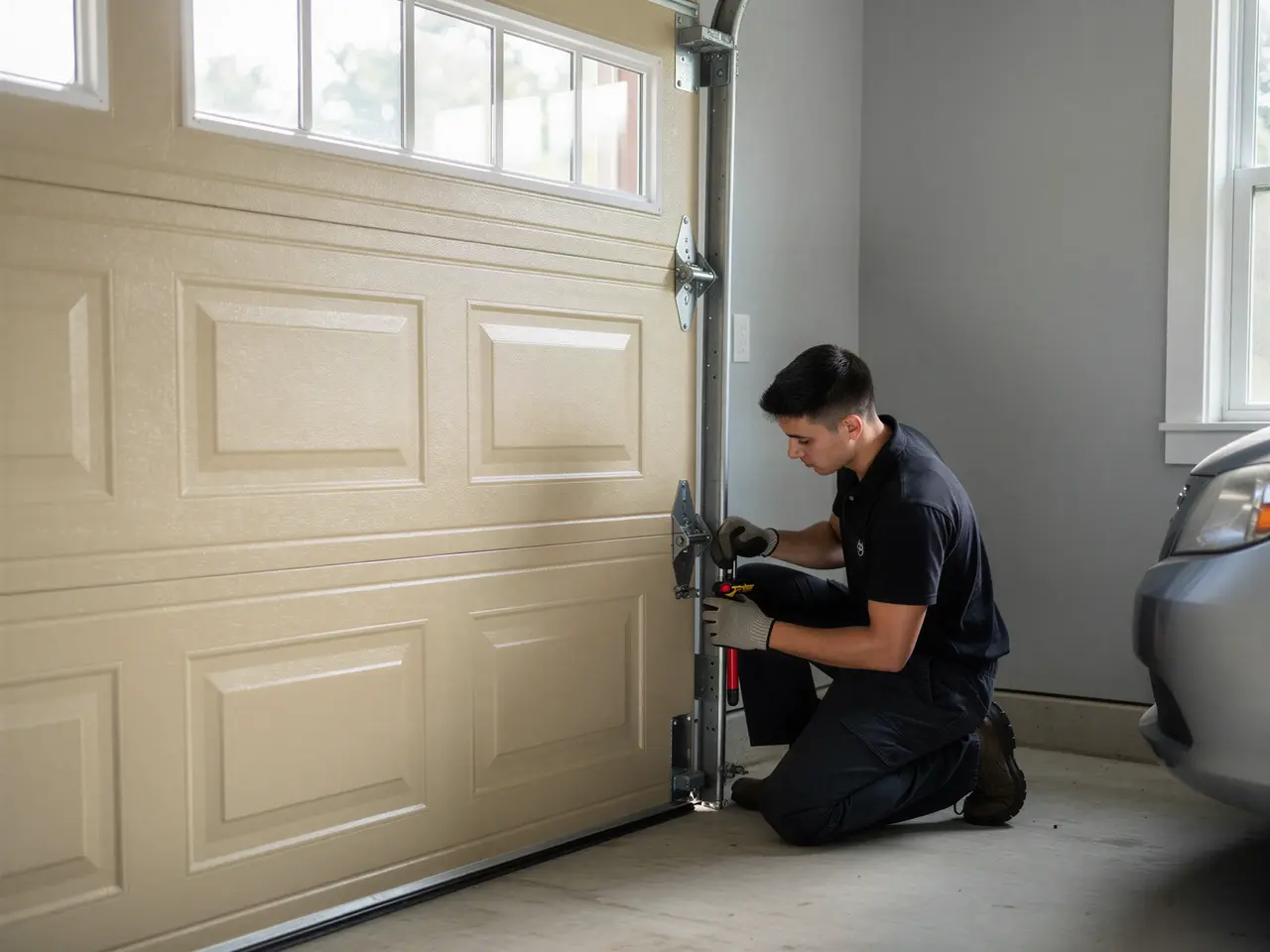
We come out from Roseville, eight miles up the road, and the first thing we check on an older Orangevale door is which spring system it's actually running - extension or torsion - because the repair kit is different and we'd rather know before we're standing in the driveway. On extension-spring doors we replace both cables and both pulleys even if only one side failed; the other side is the same age and about to go the same way. On the opener side, a lot of these garages still have the original chain-drive unit or a first-generation replacement, and parts for units that old aren't something we stock - we're usually swapping the whole opener rather than hunting a part number that was discontinued years back. For wood panel doors we check the bottom panel for rot before we touch the springs; sometimes the door itself is the problem, not the hardware holding it. We rebalance every door we service, since a door this age has almost always drifted out of spring tension slowly, one degree at a time, without anyone noticing until it won't stay up.
What Can Go Wrong
The most common call here is a snapped cable on an extension-spring door - the door drops on one side, jams at an angle, and sometimes takes the track bracket with it. Close behind that is a frayed or glazed roller track; years of summer heat make the nylon rollers brittle, and a brittle roller chips rather than rolls, which chews up the track edge over time. Wood panel doors bring their own problem: moisture gets into the bottom rail even in a dry climate, through condensation more than rain, and the panel swells and binds against the frame. On the opener side, the safety reversal mechanism on an older unit can drift out of adjustment, which is a problem you don't want to leave alone - a door that doesn't reverse on contact is a door that shouldn't be running at all until it's fixed. We've also seen torsion conversions done badly by a previous owner or handyman, where the spring is sized for a lighter door than what's actually hanging on it.
Can You Do This Yourself
Lubricating rollers and hinges, tightening loose bolts on the track brackets, and testing the auto-reverse with a block of wood under the door - all of that is fair game for a homeowner with a ladder and a Saturday. What isn't: touching the spring itself, whether it's torsion or extension. A wound spring under tension has put people in the hospital, and on a door this old the spring has had forty-plus years to corrode somewhere you can't see it. If your door is dropping unevenly, binding partway up, or the cable looks frayed, that's a call, not a project. One honest limit on our end - if the opener is old enough that the manufacturer no longer makes parts for it, we're not going to pretend we can special-order a fix. We'll tell you straight that replacement is the cheaper and safer path.
Getting It Booked In
We run the eight miles out from Roseville for Orangevale calls, and we'd rather hear what the door is doing before we load the truck - a door that won't open at all needs different parts on board than one that's just noisy going up. Tell us the age of the house if you know it, since 1970s doors and anything built after the 90s need different hardware on hand. See our <a href="/near/orangevale/">Orangevale service area page</a> for how this fits with the rest of what we cover, or check the <a href="/garage-door-repair-roseville-ca">main Roseville repair page</a> for the full rundown of what we do.
Frequently asked questions
Why does my Orangevale garage door drop on one side instead of both?
That's almost always an extension-spring cable that's snapped or slipped off its pulley, common on doors from the 1970s built with extension springs along the horizontal track rather than torsion springs over the door. The spring on the other side is carrying the full weight alone, which is why the door hangs at an angle instead of coming down evenly.
Is a wood garage door from the 1970s worth repairing?
Usually, if the panel itself hasn't rotted. Check the bottom rail - if it's soft or swollen, that's wood failure, not hardware failure, and no amount of spring or roller work fixes it. If the panel's sound, the door itself can keep going for years once the springs and rollers are brought up to spec.
How far out does Roseville Garage Door Pros travel for Orangevale calls?
About eight miles each way. We don't keep a branch or depot in Orangevale - every job there is a truck coming out from Roseville, so when you call, let us know the door's age and symptom up front so we bring the right parts the first time.
Does the summer heat actually damage garage door parts?
Yes. Severe summer heat dries out lubricant fast and hardens nylon rollers until they crack or chip instead of rolling smoothly. On older doors the effect compounds - rollers that were already decades old give out sooner once they've baked through enough 100-degree summers.
More garage door services in Orangevale
Book garage door service in Roseville
Call now or request a quote - tell us what the door is doing and where you are.